Why LeStallion journals for fountain pens are worth the investment
When I first started using fountain pens, I quickly learned that not all paper is created equal. Some notebooks turned my smooth nib into a scratchy mess. Others turned my careful strokes into a feathery, bleeding disaster. I went through a lot of mediocre paper before I discovered a brand that actually understood what fountain pen users need. That brand is LeStallion, and their journals have become a staple in my daily writing routine.
I remember the exact moment I realized how important paper quality is. I was writing a letter to a friend, using a fine-nibbed fountain pen and a bottle of ink I had just bought. The ink was a deep, rich blue, and I was excited to see how it looked on the page. But when I started writing, the ink feathered out, spreading into the fibers of the paper. The letters lost their crisp edges, and the whole page looked like a blurry mess. That was the day I started researching paper that could handle fountain pen ink without turning into a disaster.
What makes fountain pen paper different
Standard printer paper is designed for ballpoint pens or rollerballs, where the ink is thick and dries quickly. Fountain pen ink is much thinner and more fluid, so it needs paper that can absorb it without letting it spread. The key is the paper's coating and fiber density. Most notebook paper is made from wood pulp, which has short fibers that leave gaps for ink to seep through. Fountain pen friendly paper uses longer fibers, often cotton or specially processed cellulose, and a coating that prevents ink from bleeding through to the other side.
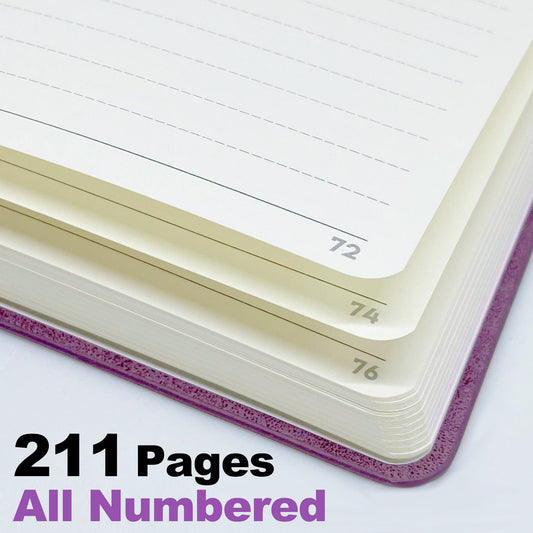
When I tested my first LeStallion journal, I was struck by how smooth the paper felt. It had a slight tooth, just enough grip to give the nib some control, but not so much that it felt like writing on sandpaper. The paper weight was perfect too. Not too thin that you could see every word from the previous page, and not so thick that the journal felt like a brick. The pages were a warm, off-white color that made the ink pop without being harsh on the eyes.
LeStallion journals for fountain pens: a practical choice
LeStallion journals for fountain pens are designed with the writer in mind. They use 100 gsm paper, which is thicker than most notebooks. That extra weight means less show-through, even with wetter nibs or heavy ink applications. I have used a broad nib with a sheening ink, and the paper handled it beautifully. No bleeding, no feathering, and the sheen was still visible. That is a rare combination.
The paper is also acid-free, which matters if you plan to keep your journals for years. Acid-free paper does not yellow or become brittle over time. I have notebooks from ten years ago that are still in good condition, but only because I used acid-free paper. Cheap paper will eventually eat itself, and your writing will fade or stain. If you are putting down thoughts, sketches, or notes that you want to revisit later, acid-free paper is not a luxury. It is a necessity.
The journal as a productivity tool
I have noticed that the quality of my journal affects how often I write. When I carried a cheap spiral notebook, I would skip days because the paper felt unpleasant. The pages would tear, the ink would bleed, and the whole experience felt like a chore. With a LeStallion journal, I actually look forward to opening the cover. The smooth paper, the sturdy binding, the lay-flat spine. All of these details make writing feel like a deliberate act, not a task on a checklist.
Productivity is not just about forcing yourself to write. It is about removing friction. When your tools work well, you naturally want to use them. I have seen this in my own habits. Since switching to a quality fountain pen and a well-made journal, I write more. I keep a daily log, I jot down ideas for projects, and I even write letters by hand again. The journal becomes a companion, not a piece of office supplies.
Practical features that matter
LeStallion journals come in several sizes, which is helpful if you have different needs for different contexts. I keep a pocket-sized one in my bag for quick notes, and an A5 at my desk for longer writing sessions. The paper is the same quality across sizes, so you do not have to compromise. The binding is sewn, not glued, which means the pages stay in place and the spine does not crack. I have had glued notebooks fall apart after a few months of use, but sewn binding lasts for years.
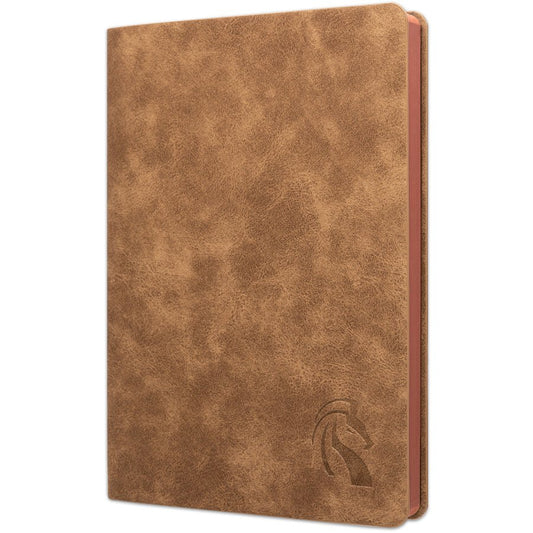
The cover is made of a soft, durable material that feels nice in the hand but also protects the pages. I carry mine in a bag with other items, and the cover has held up well. No scuffs or tears. The elastic closure keeps the journal closed when not in use, which is a small detail but important for keeping dust and debris out of the spine.
How to choose the right journal for fountain pens
If you are new to fountain pens, you might wonder if a special journal is really necessary. The short answer is yes, but it depends on your ink and nib. If you use a dry ink and a fine nib, you might get away with cheaper paper. But if you use a wet ink or a broad nib, you will see feathering and bleed-through almost immediately. Even with a fine nib, some inks are more prone to spreading. I have a bottle of a popular black ink that feathers on almost every paper except the high-quality stuff.
LeStallion journals for fountain pens are a safe bet for any combination. I have tested them with a dozen different inks, from cheap student grade to expensive boutique bottles, and the results are consistently good. The paper handles shimmer inks well, which is rare. Shimmer particles often get caught in the fibers of cheap paper, leaving a dull finish. On the LeStallion paper, the shimmer stays on top and shines through.

Another factor is the ruling. LeStallion offers dot grid, lined, and blank options. I prefer dot grid because it gives me structure without forcing me into straight lines. I can write, draw, or make tables without the lines getting in the way. The dots are printed in a light gray that does not compete with the ink. That might sound minor, but it makes a difference in how the finished page looks.
Real world experience over marketing claims
I have seen a lot of brands claim their paper is fountain pen friendly, only to find out it is not. Some notebooks use paper that is coated to prevent bleeding, but the coating makes the nib feel slippery. Others have paper that is too absorbent, so the ink dries with a flat, washed out look. LeStallion strikes a balance. The paper has enough absorbency to dry the ink quickly, but not so much that it kills the shading or sheen.
I tested this by writing a line with a shading ink, one that goes from dark to light as you write. On many papers, the shading is barely visible because the ink soaks in too fast. On the LeStallion paper, the shading was clear and gradual. That is the kind of detail that matters to fountain pen users. It is not just about whether the paper holds up. It is about whether the paper enhances the writing experience.
Comparing with other options
I have used other popular fountain pen journals, and they all have trade-offs. Some are more expensive per page. Some have paper that is too thin, so you get ghosting even with a fine nib. Some have paper that is too thick, making the journal bulky. LeStallion sits in a sweet spot. The price per page is reasonable, the paper quality is high, and the build quality is solid. I have not had a single page tear or a signature come loose.
One thing I appreciate is that the paper is fountain pen friendly out of the box. I have had notebooks that required a break-in period before the paper felt right, which is frustrating. With LeStallion, every page is consistent. I can pick up any journal from the same batch and know exactly what to expect.
A journal that respects your time and your writing
At the end of the day, a journal is a tool. But it is a tool that you use for something personal. Whether you are keeping a diary, taking notes in a meeting, or sketching ideas for a creative project, the journal becomes part of the process. If the paper fights you, the process suffers. If the paper supports you, the process becomes smoother and more enjoyable.
I have been using LeStallion journals for fountain pens for over a year now, and I have not felt the need to look for another brand. They do what they promise. The paper handles fountain pen ink without bleeding or feathering, the binding is durable, and the overall design is thoughtful. If you are a fountain pen user looking for a reliable everyday journal, this is a solid choice.
The best way to know is to try one yourself. Pick a size that fits your needs, grab your favorite pen and ink, and write a page. Pay attention to how the nib feels on the paper, how the ink dries, and how the page looks when you are done. I think you will be pleasantly surprised.